For years, the Gulf offered a compelling mix of reach and predictability. Dubai, Abu Dhabi, Doha, and other hubs were not just wealthy cities. Much of their value comes from their role as operating platforms. Most obviously, they link Europe, Asia and Africa, support regional headquarters, and help companies move staff, goods, and services quickly.
That operating model looks different when a corridor like the Strait of Hormuz turns from a geographic reference into a live business risk. The UN Trade and Development office said in March that the strait carries around a quarter of global seaborne oil trade, significant volumes of liquefied natural gas and fertilizers, and that disruptions there transmit shocks across supply chains and commodity markets. On April 21, Reuters reported that only three ships had passed through the waterway in the previous 24 hours, compared with roughly 140 a day before the war.
“It’s not only a story of oil and gas … the conflict affected the non-oil sector, especially in terms of airlines and logistics.” Jihad Azour, IMF Middle East and Central Asia director, in Reuters
A very narrow waterway with a very wide reach
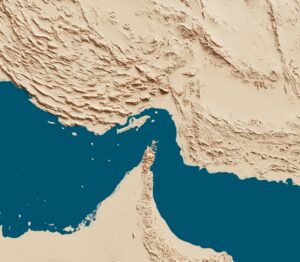
The obvious story is energy. Energy is the lifeblood of any industrial economy. The IMF reiterated the importance of the straits in April, stating that the strait normally carries roughly one-fifth of global oil supply, about one-quarter of global LNG trade, and one-third of global fertilizer and helium trade. The EIA has similarly shown that more than one-quarter of global seaborne oil trade and about one-fifth of global LNG trade moved through Hormuz in 2024 and early 2025. That is why even a partial closure does not stay local for long.
The deeper issue for business is what’s called concentration risk. A system can look resilient in normal conditions because it is efficient, busy, and well connected. It only starts to reveal its weak points when one corridor, one insurance market, one flight path, or one port cluster becomes harder to use. Bluntly, this is not just a Gulf problem. It reminds us of something that those of us who work in logistics have always known: “global” operations depend on a relatively small number of physical chokepoints.
The IMF’s April regional update underscore this, warning that if energy disruptions persist and oil prices stay much higher for longer, global growth could fall to 2.6 percent in 2026 while inflation reaches 5.4 percent. The World Bank likewise said the conflict has weakened the 2026 outlook for the wider region and that a prolonged war would compound the damage through higher energy and food prices, lower trade, weaker tourism and remittance flows, and growing fiscal pressure.
So as the macro outlook dims. What’s the broader picture beyond energy?
This is not just an oil shock
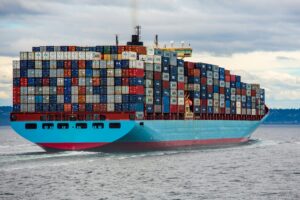
Once goods stop moving freely, the problem spreads. UNCTAD’s March report showed that daily ship transits through Hormuz had fallen a whopping 97 percent from the pre-conflict average. Reuters later reported that some hull war-risk premiums had jumped to about three percent of vessel value, roughly $7.5 million on a tanker worth $250 million, versus around $625,000 before the conflict. A second Reuters report said some insurers were talking of premium increases of up to 1,000 percent and warned that higher war-risk pricing could remain in place even after the strait reopens.
That matters because logistics costs don’t rise within a single line item. The cost increase is spread across freight rates, fuel, re-routing, storage, insurance, detention and lost time. They also show up in decisions that look small but add up quickly: which carrier to use, whether to split a shipment, whether to move by air instead of ocean, whether to hold stock longer, and whether a shipment is still commercially viable once all the extra handling is priced in.
Air Cargo is the same. In early March, Reuters cited Aevean data showing a 22 percent reduction in global air cargo capacity as flights across the region were grounded. By April 10, another Reuters report said capacity that had been expected to grow 5.5 percent this year had instead fallen 1 percent. Reuters also quoted Xeneta’s Niall van de Wouw saying Gulf carriers operate some of the world’s most important air freight networks. When those networks are disrupted, the effect is not limited to one airport or one carrier. It changes global routing options.
And even if diplomatic conditions improve (and that’s a big if!), the recovery may be slower than the headlines suggest. On April 20, Reuters reported that restoring flows through Hormuz could take months, and in some cases years, because production, infrastructure, insurance, vessels, and commercial confidence do not all recover at the same speed.
The first disruption is a canceled flight, not a missed shipment
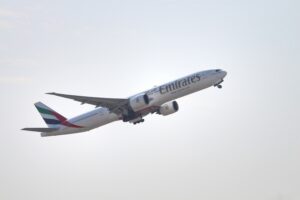
This is where the issue becomes more relatable to companies outside the energy sector. Supply chains are made of people as well as cargo. Executives still need to travel. Assignees still need to move. Families still need to arrive. Schools, housing, and immigration timelines still matter. If flights are canceled, air corridors narrow, or travel costs spike, corporate mobility does not stop, but it becomes harder, more expensive and, predictably, much more stressful.
In early March, Reuters reported that more than 21,300 flights had been canceled at seven major Gulf airports, including Dubai, Doha, and Abu Dhabi. The IMF later said departures had fallen by roughly one-third in Abu Dhabi, about two-thirds in Dubai, and about three-quarters in Doha, while Kuwait City and Manama saw complete suspensions at one stage.
That means the value of support rises before moves begin. Policy advice, route planning, temporary accommodation, storage, and cost management become more important when clients are dealing with sudden disruption, and we’re discovering this in real time with our Relocations businesses. It also underscores that moving employees isn’t just a shipping exercise. It’s a timing and continuity exercise, especially if employees or families need to stagger their move, store household goods temporarily or even change route at short notice.
Logistics becomes more important the more unpredictable the world
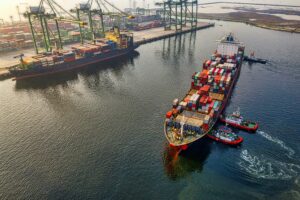
This is the point that broad commentary often misses. Not every supply chain is interchangeable. Commodity flows can sometimes absorb delays more easily than specialist flows. A delayed shipment of household goods affects a family. A delayed transfer of records can create a compliance problem. A delayed office move can extend downtime. It also creates a huge amount of latent reputational risk.
The challenge for companies like us is not simply getting something from A to B. It is managing exceptions without losing control of timing, visibility, compliance or customer confidence. Our work spans relocations, mobility, information management, workspace change and the lesson is straightforward for us. Logistics is not only about freight, it’s principally about reliability and continuity.
And continuity is increasingly strategic. Reuters quoted IMF regional director Jihad Azour saying the conflict is not only about oil and gas, but also about other products in which the region holds a strategic position. That is exactly the right frame. The real question for companies is no longer whether Gulf instability matters to logistics. It is how far that risk travels into, quite literally, everything else.
The long tail impact is just beginning
Companies are unlikely to wholly go back to old assumptions even after some semblance of stability is restored. Some will diversify routing, hold more buffer stock, update mobility policies for split starts, temporary storage, and emergency support. Some will double down on technology, so fewer critical records depend on a single location or retrieval path. Some might even rethink whether one hub should carry so much operational weight (this one is still the biggest open question).
But the best response is to not panic. The Gulf still matters enormously. The region’s infrastructure, connectivity and commercial depth do not disappear because one conflict has exposed limits. However, all businesses must engage honestly about the price of concentration and the absolute necessity of preparation. That means treating everything from freight logistics to mobility support and information resilience as part of the same conversation on risk management.
How exposed are your people, records, and critical assets if one corridor stops working?