Supply-chain disruptions are no longer temporary, and arguably haven’t been for several years now, so what does this all mean for logistics firms?
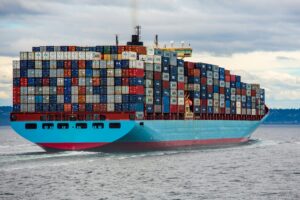 The World Economic Forum now describes this as an era of “structural volatility”, shaped by geopolitics, industrial policy, energy transition and technological change, with 74% of business leaders viewing resilience as a driver of growth. In 2025 alone, tariff escalations reshuffled more than $400 billion in global trade flows, disruptions across major shipping routes pushed container shipping costs up 40% year on year, and more than 3,000 new trade and industrial policy measures were introduced globally.
That is the new reality for everyone in the logistics space, from the smallest 3PL to the largest freight fleet operators. And it raises harder questions than the sector has been used to asking: How do customers maintain certainty when markets are fragmenting? What happens when critical infrastructure isn’t under your control? How should companies balance flexibility with resilience? And what does stewardship really mean when customers trust you with valuable records, works of art, workplace assets, wine, equipment, samples or sensitive documents?
For many logistics companies, the answer in recent years has been to stay “asset-light.” In plain terms, that means owning fewer warehouses, vehicles and other fixed assets, instead using rented space and third-party partners to scale up or down quickly. That approach can reduce capital commitments. But it also has its limits, as many are now finding out. When pressure rises, long-term capacity starts to matter more.
Why having an owned footprint matters to us
Our view is different. We believe certainty must be built into the operating model, even when that means more up-front capital investment.
This isn’t a new philosophy. Our journey began in 1965 with a single shipment from Japan and the vision of our founder. From those beginnings, we grew into a global business built around safeguarding what matters most to people: priceless art, vital records, irreplaceable collections. Owned storage has always been central to that. Our 2030 strategy keeps those appreciating assets at the forefront because they create better customer solutions, support higher margins and provide the financial stability needed for sustainable growth.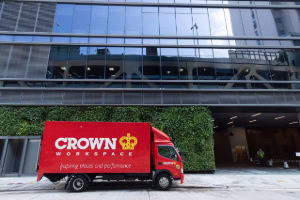
That long-term thinking is more relevant than ever. Today, we operate across 36 countries, with 263 facilities and 9.5 million square feet of warehousing. Our 2030 ambition includes a target to invest $45 million in property, a reflection of the value we place on owned assets as part of a specialist, resilient logistics business.
What that looks like in practice
The proof is visible in the facilities we’ve opened, acquired, expanded or developed during 2025 and 2026. But rather than simply list them, it’s worth explaining what they represent and why they were built where they were.
India: the “hub” model of providing a range of services
India is perhaps the clearest example of our approach. We already had vault storage operational in Chennai from January 2026, giving clients in one of India’s major financial and technology hubs access to secure, specialist storage well before broader demand required it. That kind of forward investment is deliberate.
In Bangalore, we opened our third Crown-owned facility in 2025: a seven-acre site with 900,000 Standard Carton Equivalent (SCE) of warehouse capacity. But the building itself is only part of the story. The facility also includes space for Relocations, Workspace and our Renew Centre, our dedicated hubs for renewing office furniture and IT equipment, with 25% of land earmarked for future expansion: an additional 500,000 SCE Information Management facility, bonded warehouse space, vault and fine art storage, wine and spirit storage, and cold storage.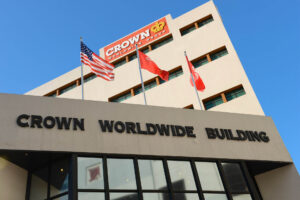
We’re increasingly thinking of this kind of facility less as a warehouse and more as an operating platform, a place where large corporate clients can access records storage, workplace change support, relocation services and specialist storage all in the same market, from the same trusted partner. When a business needs spare parts and hardware stored securely alongside sensitive documents in a climate-controlled vault, owned infrastructure is what makes that possible.
The Bangalore facility also reflects how we think about building for the long term: enhanced natural lighting, high Solar Reflective Index roof panels, an open access energy system for renewable sourcing, reused racking from the previous facility, a 380-kilolitre rainwater harvesting pond and a sewage treatment plant, with EDGE certification in progress. In a market growing at speed, owning the facility gives us more than capacity. It gives us the ability to design for security, efficiency and long-term margin.
Coimbatore followed in May 2026, adding more than 468,000 SCE of initial capacity, with potential to reach 720,000 SCE in the next phase, supporting all our business units including Crown Workspace and our Workspace Renew Centre. South India’s manufacturing, engineering and IT sectors are growing fast; being present with owned infrastructure rather than borrowed space means we grow with them, not after them.
Southeast Asia and the Middle East: specialist storage where it counts
In Singapore, we acquired a 134,400 square foot facility in June 2025, serving CIM carton and file storage, Crown Fine Art and Crown Workspace. Another operating platform, another market where the breadth of what we can offer from a single owned location sets us apart.
In Ho Chi Minh City, we’ve taken a different but equally deliberate approach: climate-controlled vault storage built from converted sea containers, with fire-resistant protection for high-value documents, media and backup tapes, and temperature and humidity control for items as varied as a crated MRI scanner and rock core samples. It’s a good illustration of how owned infrastructure enables genuine flexibility, almost any movable asset a client might need to store can be accommodated when you control the environment. Ironically, the most adaptable storage is the kind you own.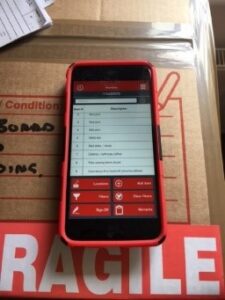
In Dubai, we operate a purpose-built vault facility for Crown Fine Art, one that has also served clients during periods of regional disruption and conflict, when dependable, secure storage wasn’t just a commercial convenience, it genuinely mattered. There are facilities you hope clients never urgently need, and there are moments when having them proves exactly why you built them.
The U.K.: shared infrastructure, multiplied value
In the U.K., our heritage preservation work shows how owned infrastructure can unlock value across business units simultaneously. Museums, galleries and libraries face a familiar set of pressures: growing collections, limited space and costly listed buildings. By bringing together Crown Fine Art for specialist handling and climate storage, Crown Workspace for archive decants and Crown Information Management for digitization, all within our own facilities, we can offer something a purely third-party model simply cannot replicate. The same principle applies wherever cultural heritage and specialist care intersect: owned space is what allows us to configure storage around the collection, rather than the other way around.
A note on sustainability
There’s one more reason ownership matters. Logistics real estate is growing more complex as occupiers seek efficient, future-ready facilities. As CBRE notes, power availability is becoming critical for increasingly power-hungry warehouses and automation, something that requires direct coordination with upstream energy providers. That kind of coordination is significantly easier when you own the building.
Dependability is the competitive advantage
The conditions described at the start of this article are not going away. If anything, the years ahead are likely to bring more of the same: further industrial policy shifts as governments compete for strategic manufacturing capacity, ongoing pressure on key shipping routes, and accelerating nearshoring trends that will require physical infrastructure in more markets, not fewer.
We’ve seen what happens when that infrastructure isn’t there when it’s needed. During the supply chain disruptions of the early 2020s, businesses with asset-light logistics models found themselves competing for scarce warehouse space, paying inflated spot rates, or watching carefully constructed supply chains unravel because a third-party partner had other priorities. The Suez Canal blockage of 2021,a single vessel, a handful of days, added an estimated $9 billion per day to global trade costs. The lesson wasn’t that the world became more dangerous overnight; it was that the companies with owned capacity and stable infrastructure absorbed the disruption far better than those who were relying on the spot market to fill the gap.
The same logic applies to what our clients store with us. A law firm’s archive, a pharmaceutical company’s sample library, a gallery’s collection on loan, these things don’t become less important when markets are volatile. If anything, they become more so. Clients need to know that the logistics partner responsible for them has genuine control over the environment, the access and the continuity of care.
Our answer to that, built over sixty years and across thirty-six countries, is to own what we operate. Not because it’s the easiest path commercially, but because it’s the one that lets us keep the promises our clients make to their own clients. In an era of structural volatility, dependable logistics is the foundation everything else is built on. That will only become more apparent with time.